A place where education, empowerment & empathy play a role in supporting a positive community environment

Home arrow Community School
Community school PDF Print E-mail
In 2003 in the government exams for the first time the Grade 7 class of Nyasha achieved the highest marks of all the schools in the Katete District.
 
NyashaNyasha, the first school, opened by Elke in 1995, was a nursery school,  located in a house within the Katete townships. Parents were so happy about the good education being provided that they pushed the trained nursery school teacher to expand the programme within her home to include children of primary school age. Sadly in 2000 the trained teacher, for whom the school/home was built, died of AIDS. Now the school is being run by Tikondane and although the Katete Council has set aside a plot of land for the construction of a school building, owing to the lack of funds Tikondane is still eagerly awaiting the time for when this will be possible
 

The opening of the community school Tikondane was almost accidental. The centre was a result of the dream of increasing adult literacy within the Katete District. However some 30 of the children who had attended lessons during the holidays continued to arrive at the start of the new school year – those who were too poor to go to Government schools, which expect uniform, school shoes and donations to the PTA (Parent, Teacher Association).

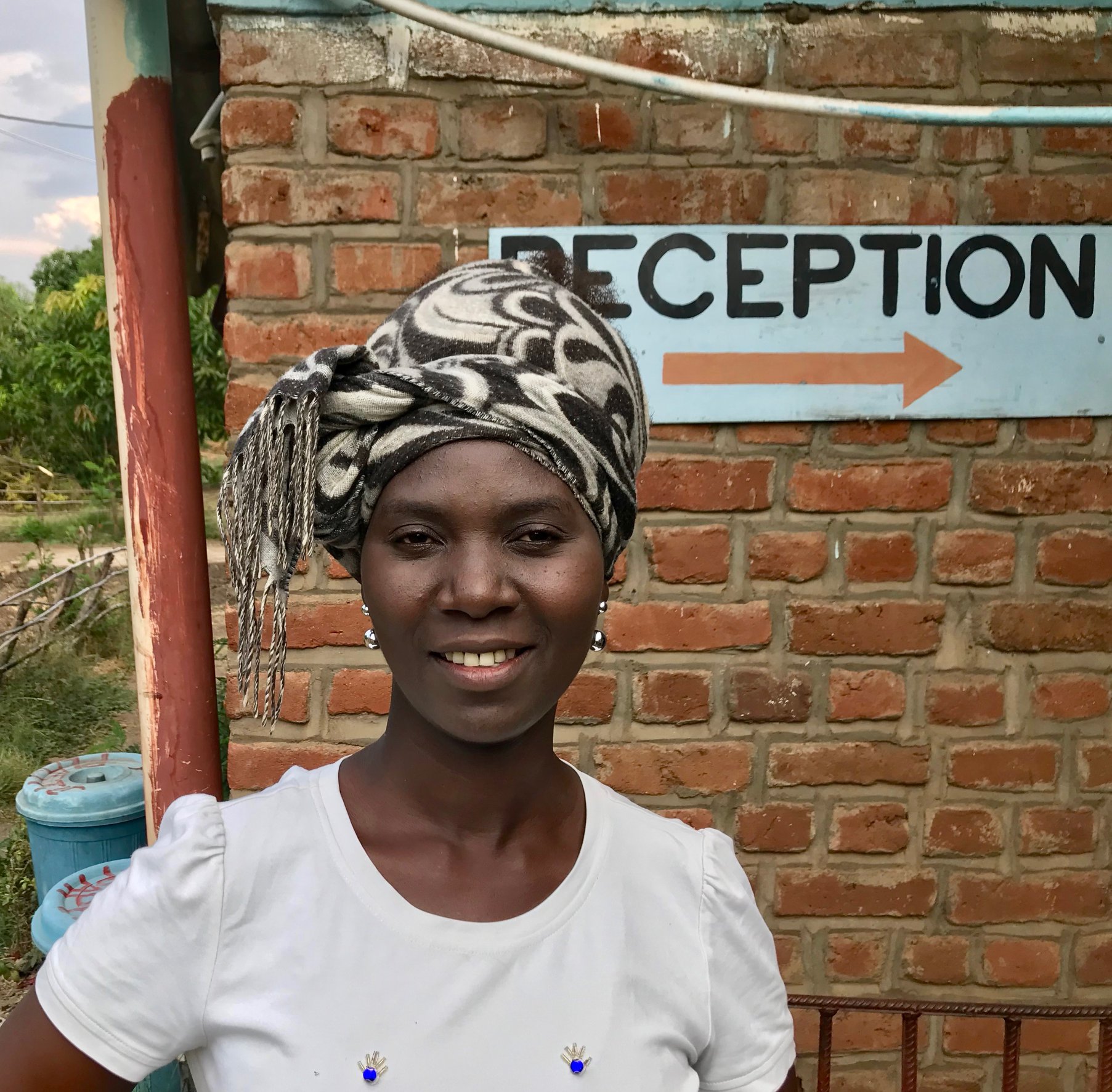
Photo of Susan Lungu, head teacher

We could not say no, and have since been recognised as a COMMUNITY SCHOOL. We now proudly educate over 300 children between the ages of 10 and 20, with classes from Grades 1-7. As in most community-based schools, the only requirement for the children is that they attend. They are provided with an exercise book and pencil to keep for the duration of their lessons. At a time of greater financial prosperity, TIKO was even able to have bags sewn for the students to carry these items to class. There are no annual fees; neither uniforms nor shoes are required.

Most of the students face difficult living conditions at home, where the struggle for food is constant. Here at school they are able to take a break from the stress that so unfairly burdens them at a young age, and remember what it is like to be a child; to interact with their peers and enjoy the simple pleasures of life.

We were very lucky to be given distributorship of emergency food for all 27 community schools in Katete District, where the children are given HEPS
(High Energy Protein Supplement) in the form of porridge once a day and the especially poor receive a supplementary bag of maize or sorghum.

This distribution started officially in September 2005 for half a year and was extended for an additional 3 months. Understandably this almost doubled the number of students enrolled. We are now in the midst of discussion for further extensions. This programme is a fantastic exercise in community education.

The flexibility required by the teaching staff of such a school is evident, and each individual educator at Tikondane takes great pride in the preparation and delivery of the lessons. The majority of our school staff are volunteers with limited or no training as a teacher. They receive a wage that would make any primary school teacher in the Western world scoff, yet manage to inspire both their students and fellow workers alike. Our Head Teacher was sent to teacher training college by friends of Tikondane and now works as a mediator between staff, students, administration and Ministry of Education in order to keep everything running as smoothly as it does. Anybody who is a teacher or who has family or friends who are teachers, will tell you that there is more to the job than meets the eye. The teachers at Tikondane not only take on this challenge in an environment with great limitations, but succeed in providing laughter, love and learning on a daily basis. While examinations are far from the only instrument needed to measure learning, we are very proud of the results received by our Grade 7 students in the required government examinations.